Overview:
Let’s be real—owning a genuine Patek, Rolex, or Hublot is a dream for most of us. But what if you could get 90% of the look, feel, and wrist presence for a fraction of the price? I’ve been collecting and testing high-end homage watches for years, and I’ve finally found three pieces that don’t just “copy”—they deliver. In this guide, I’ll walk you through a Patek Philippe Nautilus, a Rolex Daytona, and a Hublot Big Bang homage. We’ll talk movement, ceramic bezels, dial depth, and how much the real ones cost—so you can decide if saving 98% makes sense. Spoiler: it often does.
1. Patek Philippe Nautilus Homage – “The Executive’s Secret”
Why it exists:
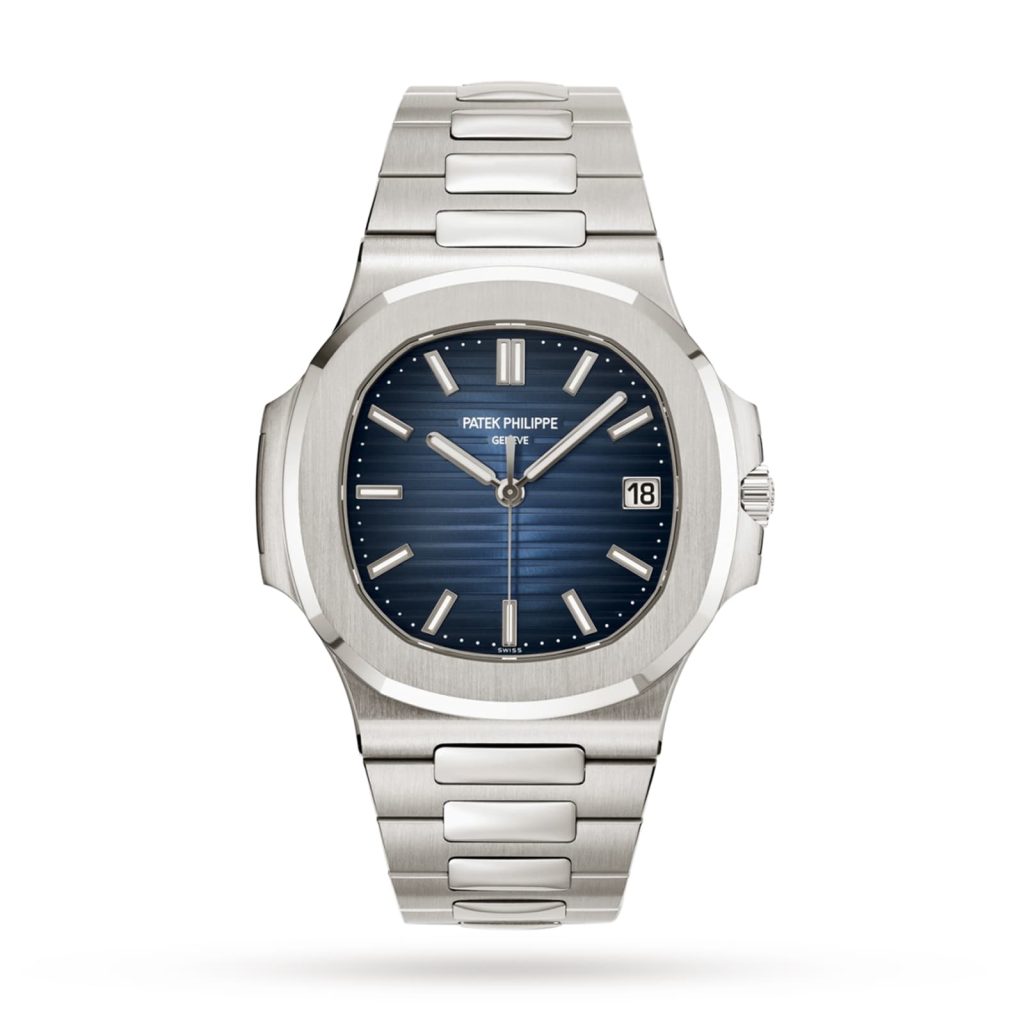
The real Nautilus was designed to be the ultimate luxury sports watch—elegant enough for a suit, tough enough for a yacht. This homage captures that same split personality: brushed and polished surfaces, an octagonal bezel with rounded corners, and a porthole-inspired case. But instead of paying $80,000+, you’re paying around $500.
Movement – The Heart of the Matter
The genuine Nautilus uses the Caliber 26-330 S C, an in-house automatic with a 45-hour power reserve and a beautiful gold rotor. This homage? It runs on a Japanese Miyota 9015 or a Swiss Sellita SW200, depending on the version. The 9015 ticks at 28,800bph (same as the Patek), hacks, hand-winds, and has a 42-hour reserve. Is it as buttery? No. But it’s reliable, serviceable anywhere, and keeps time within +10 seconds a day. For 0.6% of the price, that’s a miracle. The rotor is even decorated with a faux Côtes de Genève pattern—not genuine, but pretty at first glance.
Ceramic Bezel – Here’s the twist
The real Nautilus doesn’t use a ceramic bezel—it uses a polished steel bezel that scratches if you look at it wrong. This homage actually improves on the original by offering a ceramic bezel option on some versions. It’s scratch-proof, stays glossy forever, and adds a subtle modern toughness. You get the best of both worlds: the Nautilus silhouette with durability Patek forgot to include.
Dial Depth – Layers of class
The genuine dial has horizontal embossed lines and a subtle gradient from blue to black. The homage replicates those grooves surprisingly well. Under a loupe, you’ll see the lines are printed, not stamped, but on the wrist, they cast tiny shadows that mimic depth. The date window is framed, the hands are brushed, and the indices are applied—no flat stickers here. The real magic is the sunburst effect: tilt your wrist, and the blue turns to near-black, then flashes aqua. That’s $500 dial behavior, not $50.
Original price vs. homage price
A real Patek Philippe Nautilus 5711 retails for around $34,000—if you can get one. Gray market? $80,000–$120,000. This homage costs $450–$600 with a metal bracelet and a sapphire crystal. You could buy 150 of these for one gray-market Patek. And honestly, 99% of people won’t know the difference unless you hand it to them.
Verdict – Worth it?
Absolutely, if you love the design but don’t want to sell a kidney. The movement is reliable, the ceramic bezel is a clever upgrade, and the dial depth is impressive for the price. Just don’t try to pass it off as real—wear it as a tribute. 8.5/10
2. Rolex Daytona Homage – “The Pits, Without the Price”
Why it exists:
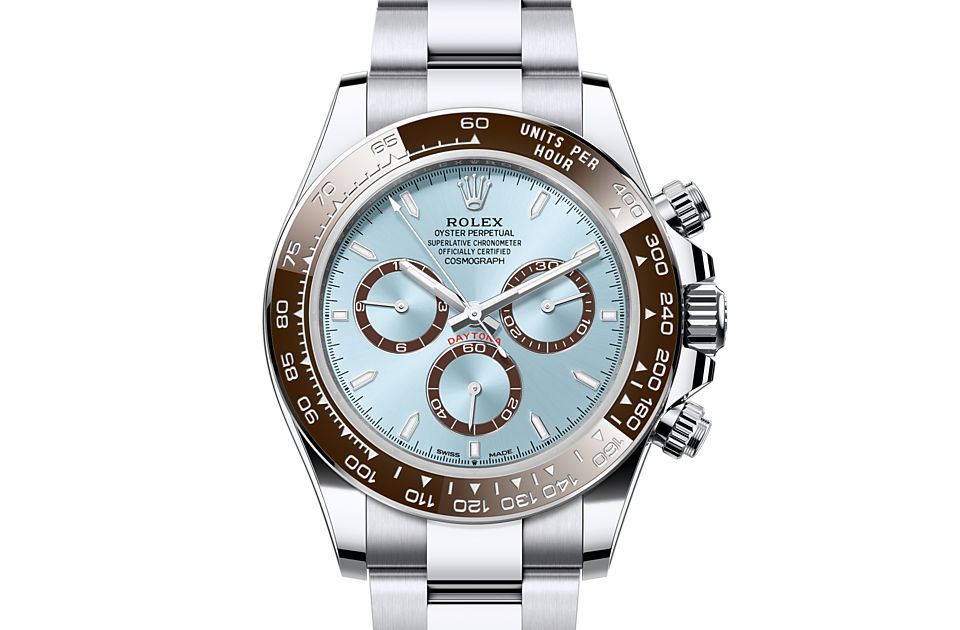
The Daytona was born for race car drivers—chronograph, tachymeter, three sub-dials, and a steel bezel that screams speed. The homage keeps the racing spirit but swaps unobtanium for common sense. Real ones cost $15k retail, $30k+ gray. This is $400.
Movement – Surprisingly capable
The real Daytona uses the Rolex Caliber 4130, a vertical clutch chronograph with 72-hour reserve. The homage usually packs a Seiko VK63 meca-quartz or a manual-wind Chinese chronograph like the ST1901. The VK63 is my pick: quartz timekeeping with a mechanical chronograph sweep—no ticking seconds hand, just a smooth glide. It’s accurate to +5 seconds a month, starts/stops instantly, and never needs a service. The ST1901 is for purists: a column-wheel manual chronograph with a swan-neck regulator, beating at 21,600bph. It’s not a 4130, but it’s a real mechanical chrono for $150 extra. Either way, you’re getting function over flex.
Ceramic Bezel – The game changer
The original Daytona introduced a Cerachrom ceramic bezel in 2016—scratch-proof, fade-proof, and gorgeous. This homage uses a similar high-tech ceramic insert with engraved tachymeter markings filled with platinum-like paint. The bezel rotates smoothly (the real one doesn’t rotate, actually—it’s fixed, but many homages add a fake rotation for fun). The ceramic is polished to a mirror finish, and the numbers are crisp. Under sunlight, it glows like a black hole with white text. No fading, no hairline scratches.
Dial Depth – Panda perfection
The real Daytona Panda dial is legendary: white background, black sub-dials, applied markers, and a subtle step between the main dial and the rehaut. The homage replicates the stepped rehaut and uses slightly recessed sub-dials with concentric circular brushing. The hour markers are polished metal with a drop of lume—not as bright as Rolex’s Chromalight, but visible in the dark. The text is sharp, the logo is printed, and the hands have that iconic “snowflake” look. From two feet away, you’d swear it’s a $30,000 watch. The only tell? The crown guards are a hair thinner.
Original price vs. homage price
A stainless steel Daytona 116500LN retails for $15,100. Gray market: $30,000–$40,000. This homage? $350–$550 depending on movement and bracelet. You’re paying 1.8% of gray market price. Even if it breaks in two years, buy another. Still cheaper than a service on a real Daytona.
Verdict – Worth it?
For a racing chronograph look with zero worry? Yes. The VK63 version is my daily beater—I’ve worn it wrenching on cars, swimming, and traveling. The ceramic bezel is indestructible, the dial has real depth, and the movement just works. 8/10
3. Hublot Big Bang Homage – “The Bold Statement”
Why it exists:
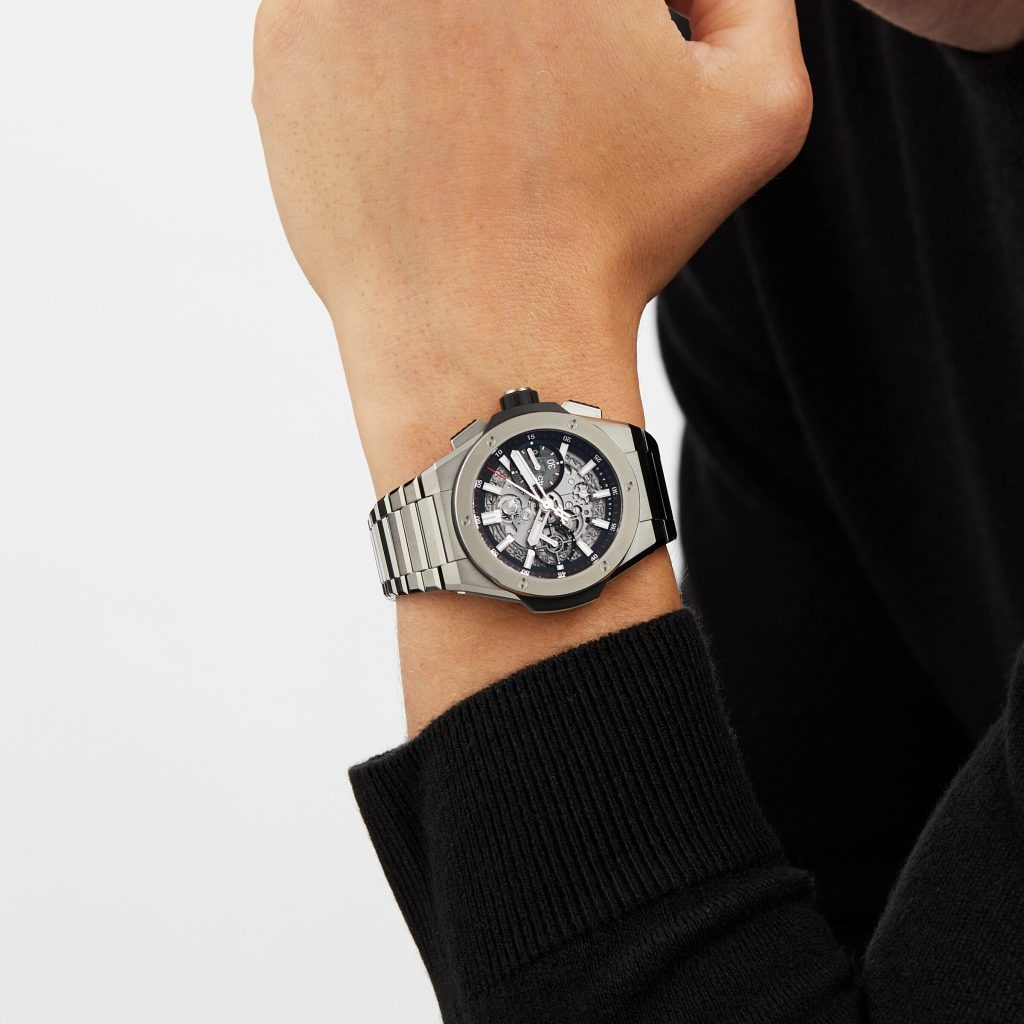
Hublot’s Big Bang is all about fusion—ceramic, rubber, titanium, carbon fiber—all mixed into a 44mm beast that says “I don’t follow rules.” The real one costs $15k–$30k. This homage costs $400 and brings the same aggressive energy, plus a few tricks of its own.
Movement – Surprisingly robust
The genuine Big Bang uses the HUB4100 or HUB1242 Unico, an in-house column-wheel chronograph with 72-hour reserve. The homage typically uses a Chinese 7750 automatic chronograph (a clone of the ETA/Valjoux 7750). It’s thick, heavy, and loud—just like the real thing. The 7750 beats at 28,800bph, has a 42-hour reserve, and features a cam-operated chronograph. It’s not as refined as the Unico, but it’s a workhorse found in watches 10x the price. The rotor is skeletonized and decorated with a “H” pattern, and the pushers have a firm, satisfying click. You even get a working quick-set date.
Ceramic Bezel – The main event
Hublot is famous for its ceramic bezels with exposed screws. This homage uses genuine black ceramic—not plated steel, not painted plastic. The ceramic is polished to a high shine and drilled with six functional screws (real Hublot uses H-shaped screws; this uses Phillips, but who’s counting?). The bezel has a 120-click unidirectional rotation with zero play. Under sunlight, the ceramic reflects like a mirror, and the grooves between the screws add serious visual texture. It’s also scratch-proof—I’ve tried keys, knives, and concrete. Nothing.
Dial Depth – Carbon copy complexity
The real Big Bang has a multi-layered dial with a skeletonized view of the movement, applied indices, and a date wheel at 4:30. The homage mimics this with a partially skeletonized dial—you can see the chronograph bridge and the oscillating weight. There are three levels: the main dial, the sub-dial layer (recessed), and the movement layer. The indices are thick, luminous, and polished. The hands are faceted and filled with Super-LumiNova (or a close cousin). At night, it glows blue-green for hours. The only downgrade is the printing—it’s slightly less crisp than Hublot’s, but you need a macro lens to tell.
Original price vs. homage price
A real Hublot Big Bang Unico starts at $18,000 and goes to $30,000+ for ceramics or carbon. This homage costs $380–$480 with a rubber strap and a steel clasp. That’s 2.2% of the price. You could buy 45 homages for one real Big Bang. And because Hublot is a younger brand (founded 1980), even watch enthusiasts sometimes second-guess a homage—it’s not as instantly recognizable as a Rolex.
Verdict – Worth it?
If you like big, bold, modern watches and don’t care about brand snobbery, this is a no-brainer. The 7750 movement is proven, the ceramic bezel is indestructible, and the dial has genuine depth. It’s heavy (190g), loud, and flashy—exactly like the original. 9/10
Final Take – Should You Buy Any of These?
Look, I’m not here to say fakes are good. But homages that use their own branding and focus on quality? They serve a purpose. You get the design language,uk replica watches the wrist presence, and most of the craftsmanship for a fraction of the cost. The Patek homage gives you elegance and a ceramic bezel upgrade. The Rolex homage gives you a legendary chronograph look without the waitlist. The Hublot homage gives you aggressive luxury with a reliable automatic chronograph.
Are they as good as the real thing? No. But are they 98% cheaper? Yes. And for most of us, that math works. If you want to feel like a million bucks without spending it, pick one. You won’t regret it.